
TL;DR
- SMBs don’t need to beat big-box retailers on size or price to compete successfully.
- Personalized service and customer experience are major competitive advantages.
- Modern POS and payment technology helps small businesses operate more efficiently.
- Loyalty programs, email marketing, and text promotions can strengthen customer relationships and drive repeat business.
- Flexibility and agility allow SMBs to adapt faster to customer needs and market trends.
- Offering convenient payment and shopping experiences helps meet modern customer expectations.
- The businesses that stand out are often the ones that combine strong relationships with the right technology tools.
For small and mid-sized businesses, competing with big-box retailers can sometimes feel impossible. Large chains have massive advertising budgets, national brand recognition, expansive inventory, and pricing power that most local businesses simply can’t match.
But the reality is that small businesses don’t need to beat big-box stores at their own game to succeed. In many cases, the businesses that thrive are the ones that focus on the advantages large retailers can’t easily replicate such as personalized service, flexibility, community connection, and customer experience.
Technology has also leveled the playing field. Tools that were once only accessible to enterprise retailers are now available to businesses of every size, giving SMBs the ability to operate smarter, serve customers better, and create experiences that build long-term loyalty.
Competing with big-box retailers is about being more connected, more agile, and more intentional.
Focus on Experience Instead of Price
One of the biggest mistakes small businesses make is assuming they need to compete purely on price. Big-box stores often have the advantage there due to their scale and purchasing power. Trying to constantly undercut large retailers can quickly become a race to the bottom that hurts profitability. Instead, many successful SMBs compete with customer experience.
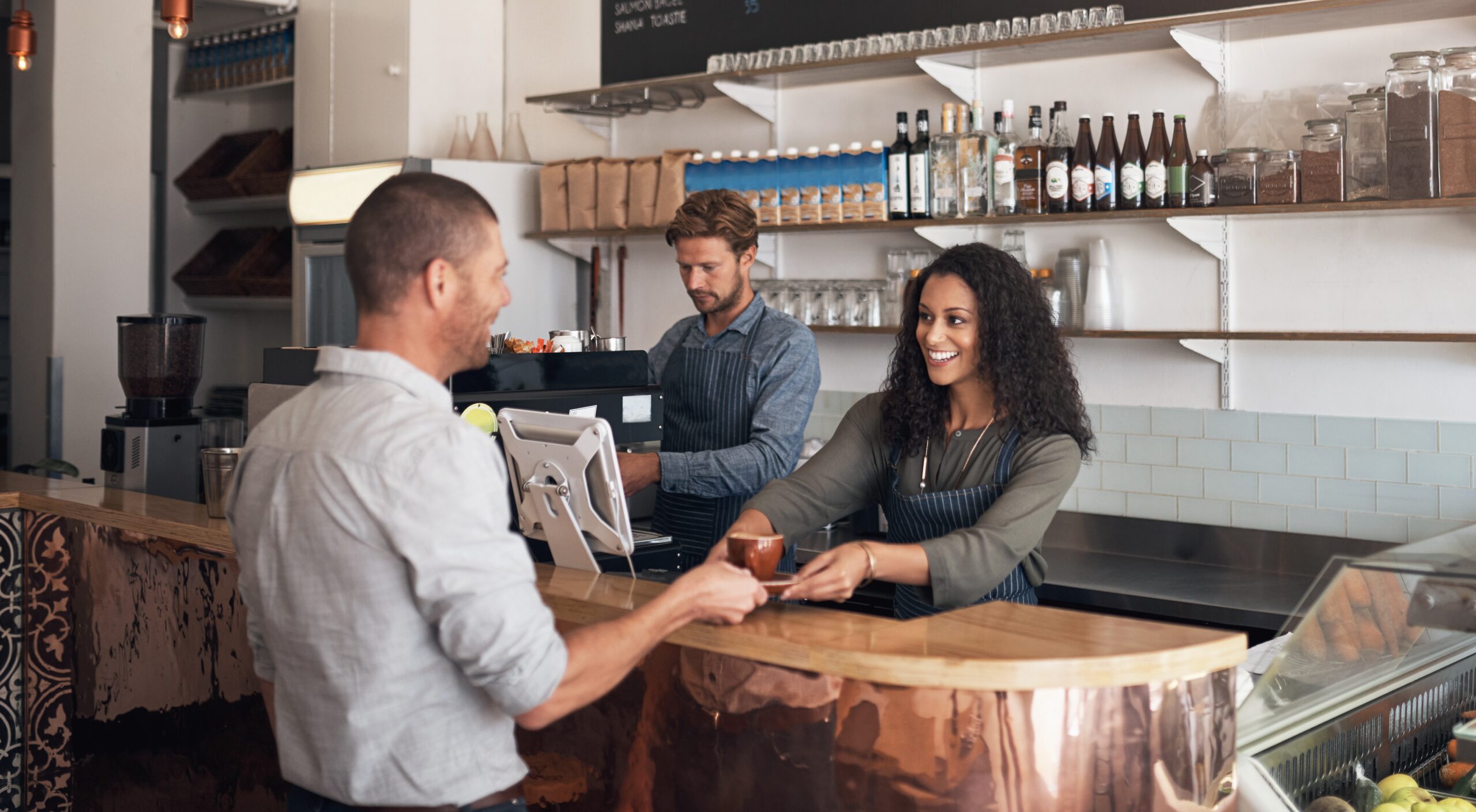
Customers increasingly value convenience, personalization, and relationships. They want businesses that make them feel known and appreciated rather than just another transaction. A local boutique that remembers a customer’s preferences or a neighborhood coffee shop that greets regulars by name creates a different kind of loyalty than a large retailer typically can.
Experience also extends to how easy it is to do business with you. Long wait times, outdated payment systems, or clunky checkout experiences can create friction that sends customers elsewhere. On the other hand, businesses that offer smooth, modern experiences often leave a stronger impression.
Simple improvements like contactless payments, mobile checkout options, digital receipts, or online scheduling can help create the kind of convenience customers now expect. These details may seem small individually, but together they shape the overall perception of your business.
Use Technology to Your Advantage
Technology has become one of the biggest equalizers for small businesses. In the past, advanced reporting, inventory management, customer insights, and integrated payment solutions were often reserved for large enterprises with significant budgets. Today, many of those same capabilities are available to SMBs through modern point-of-sale systems and cloud-based business tools. That means small businesses can operate with greater efficiency without needing a massive staff or complicated infrastructure.
Modern business tools can help SMBs:
- Track sales trends and customer behavior
- Manage inventory more effectively
- Accept payments in-store, online, or on the go
- Send invoices or recurring billing requests
- Offer loyalty programs and promotions
- Access real-time reporting and analytics
The goal is not to become a giant retailer overnight. The goal is to eliminate unnecessary friction and create a more streamlined experience for both the business and the customer.
For example, a service business that accepts mobile payments in the field may close transactions faster and improve cash flow. A retail shop with integrated inventory tracking may avoid stock issues and make smarter purchasing decisions. A restaurant with online ordering capabilities may create an additional revenue stream while improving convenience for customers.
Lean Into Agility
One major advantage SMBs have over big-box retailers is speed. Large organizations often move slowly. New initiatives may require multiple approvals, layers of management, and long implementation timelines. Small businesses can often make decisions and adapt much faster.
That flexibility matters. Customer preferences change quickly, and businesses that can respond efficiently often have an edge.
Small businesses can:
- Introduce new products or services faster
- Adjust pricing or promotions quickly
- Test new ideas with less bureaucracy
- Adapt to local market trends
- Personalize offerings for specific customer needs
This agility also applies to customer service. When issues arise, SMBs often have the ability to resolve concerns quickly and personally rather than routing customers through multiple departments or support channels.
Customers remember businesses that are responsive and easy to work with. In many cases, responsiveness becomes a competitive advantage on its own.

Build Stronger Customer Relationships
Relationships are one of the strongest differentiators an SMB can build. Customers are more likely to return to businesses where they feel appreciated, recognized, and supported rather than treated like just another transaction.
Modern POS technology can play a major role in strengthening those relationships. Many SMBs now use integrated loyalty and marketing tools directly within their point-of-sale systems to stay connected with customers long after the sale.
For example, businesses can:
- Offer loyalty programs that reward repeat visits and purchases
- Automatically collect customer contact information at checkout
- Send personalized email or text promotions
- Notify customers about upcoming events, specials, or seasonal offers
- Re-engage customers who haven’t visited in a while
- Deliver targeted offers based on customer purchasing behavior
These tools allow SMBs to create more personalized experiences without adding significant manual work for staff.
A local coffee shop can reward frequent customers with free drinks. A salon can send appointment reminders and promotional offers via text. A boutique retailer can email customers when new inventory arrives that matches their shopping preferences.
This type of communication helps small businesses stay top of mind while creating a more connected customer experience.
Unlike big-box retailers that often rely on broad, mass marketing campaigns, SMBs have the advantage of making customer interactions feel personal and relevant. When paired with the right POS and marketing tools, those relationships can turn occasional shoppers into long-term loyal customers.
Offer Convenience Across Multiple Channels
Customers expect flexibility in how they shop and pay. That doesn’t mean every small business needs a massive eCommerce operation or a highly complex technology ecosystem. But it does mean businesses should think about how customers prefer to interact with them.
For some businesses, that may include:
- Online ordering
- Email invoices
- Text-to-pay options
- Mobile payment acceptance
- Buy online, pick up in-store
- Appointment scheduling tools
- Digital receipts
The key is making the customer journey simple and convenient.
Many consumers move fluidly between online and in-person interactions. They may discover a business online, ask questions through social media, and then complete a purchase in-store. Businesses that create consistency across those touchpoints are often better positioned to build trust and retain customers.
Know Your Strengths
Small businesses often underestimate the value they already provide. While big-box retailers focus on scale and standardization, SMBs can focus on individuality, expertise, and customer care. Those qualities matter, especially in industries where trust and relationships influence purchasing decisions.
Customers frequently choose small businesses because they:
- Prefer personalized service
- Want expert guidance
- Value local businesses
- Appreciate faster or more flexible support
- Want a more enjoyable buying experience
Competing successfully does not require copying large retailers. It requires understanding what makes your business different and leaning into those strengths consistently. The businesses that stand out are often the ones that create memorable customer experiences while using technology to simplify operations behind the scenes.
Wrapping Up
Big-box retailers may dominate in scale, but small businesses still hold powerful advantages. Personalized service, agility, local relationships, and customer experience continue to matter, and modern technology has made it easier than ever for SMBs to compete in meaningful ways.
Success today is not about trying to outspend or outsize larger competitors. It’s about creating experiences customers value, operating efficiently, and building relationships that keep people coming back.
The right combination of payments, POS, and customer engagement tools can help small businesses compete in meaningful ways. A conversation with the right partner can help you explore what’s possible.

by Xplor Pay
-
First published: May 07 2026
Written by: Xplor Pay